
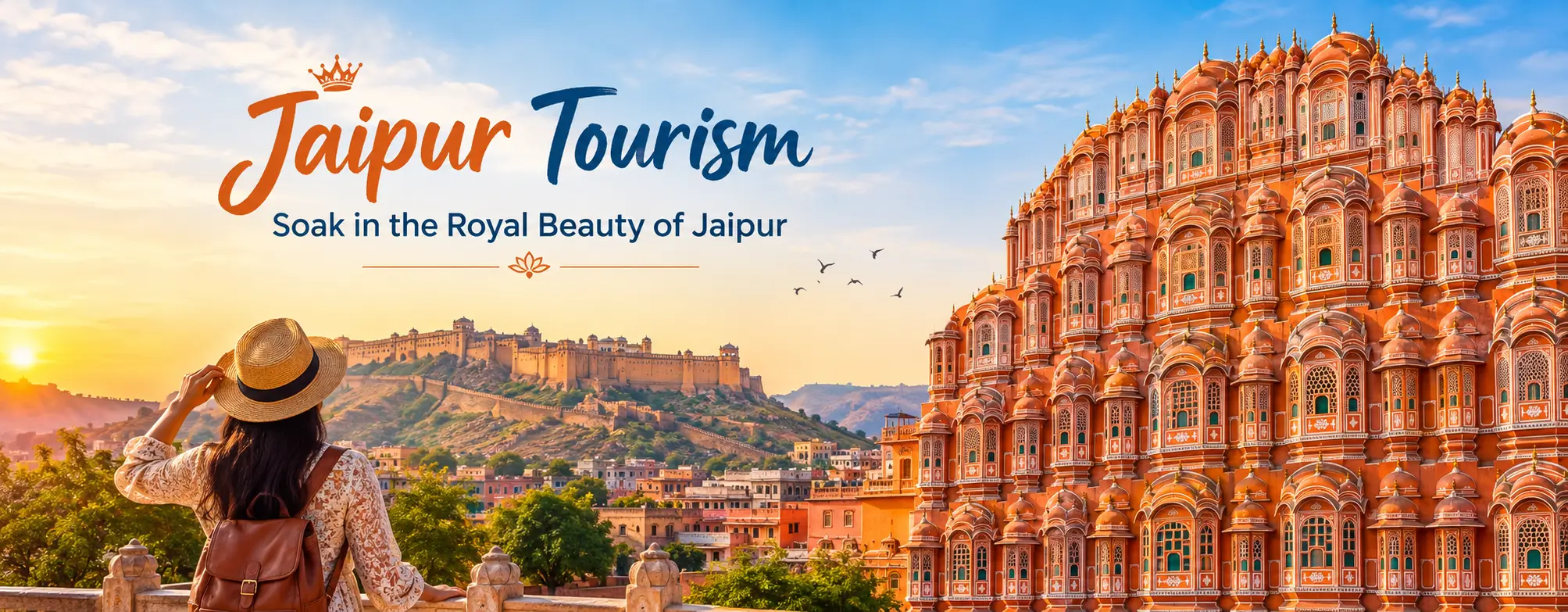
Jaipur Tourism
Jaipur Tourism offers far more than a collection of magnificent forts and palaces. The capital of Rajasthan is a living expression of royal history, planned urban design, traditional crafts, colourful festivals, cuisine, architecture, commerce and contemporary city life. Founded in 1727 by Maharaja Sawai Jai Singh II, Jaipur was deliberately planned as a new commercial and administrative city, with a distinctive grid layout, public squares, markets and residential quarters. The historic walled city is now recognised as a UNESCO World Heritage Site.
Known worldwide as the Pink City, Jaipur combines its 18th-century heritage with the character of a modern Indian metropolis. Its attractions range from the monumental Amer Fort and City Palace to the scientific legacy of Jantar Mantar, the iconic façade of Hawa Mahal, traditional bazaars and neighbourhoods where crafts continue to play an important role. For travellers researching Tourism in Jaipur, the city offers several dimensions to explore. Its royal heritage tells the story of Jaipur’s rulers; its markets reveal centuries-old commercial and artisanal traditions; its festivals bring local culture into the streets; and its cuisine reflects the distinctive flavours of Rajasthan.
Enquiry Form
Jaipur Tourism and the History of the Pink City
The story of Jaipur Tourism begins with Maharaja Sawai Jai Singh II, who founded the city in 1727. He moved the capital from Amber to the new settlement partly because of population growth and water-related pressures and envisioned Jaipur as a well-planned centre of trade and governance. The city was planned with the assistance of architect and city planner Vidyadhar Bhattacharya.
Unlike many historic Indian cities that developed gradually around existing settlements, Jaipur was conceived according to a structured urban plan. Its streets, markets, public squares known as chaupars, temples, residences and commercial areas were arranged systematically.
This planning is an important reason Jaipur is significant from a heritage perspective. UNESCO describes the historic city as an exceptional example of indigenous urban planning in South Asia, reflecting influences from Hindu architectural traditions as well as Mughal and Western planning ideas. The city’s famous pink appearance dates to 1876, when Jaipur was painted pink to welcome the Prince of Wales, Albert Edward. The colour subsequently became closely associated with the identity of the city.
Royal Heritage and Architecture in Jaipur
Royalty is one of the defining elements of Jaipur Tourism. The city and its surrounding hills preserve a remarkable collection of forts, palaces, temples, gardens and royal residences that demonstrate the architectural ambitions of Jaipur’s rulers.
Amer Fort
Located in the hills outside the main city, Amer Fort is one of Jaipur’s most important heritage attractions. The complex combines Rajput architectural traditions with Mughal influences and contains courtyards, palaces, gateways, temples and elaborately decorated interiors.
Its hilltop setting overlooking Maota Lake adds to the dramatic character of the monument. Amer Fort is also part of the UNESCO-listed Hill Forts of Rajasthan.
City Palace
The City Palace remains one of the most significant expressions of Jaipur’s royal heritage. Situated within the historic city, the complex includes courtyards, palatial buildings, museums and royal collections. Its architecture reflects the development of Jaipur’s royal court over successive generations and provides visitors with an opportunity to understand the city’s political and cultural history.
Hawa Mahal
Hawa Mahal, built in 1799 by Sawai Pratap Singh, is among Jaipur’s most recognisable architectural landmarks. Its five-storey façade contains numerous small latticed windows or jharokhas. The structure was designed to facilitate ventilation and allowed women of the royal household to observe activities on the streets without being publicly visible. (
Jantar Mantar
Jaipur’s royal legacy was not limited to architecture and warfare. Maharaja Sawai Jai Singh II also had a strong interest in astronomy. Jantar Mantar represents this scientific dimension of Jaipur’s history. The observatory contains monumental astronomical instruments designed to observe celestial positions and measure time. It is recognised by UNESCO as a World Heritage Site and is considered one of India’s most significant historic observatories.
Jaipur Culture: Where Tradition Remains Part of Everyday Life
The cultural identity of Jaipur is shaped by Rajasthan’s long history of royal courts, communities, artisans, religious traditions, folk arts and commerce. Visitors can encounter this culture through music, dance, handicrafts, food, festivals and everyday interactions in the city’s historic neighbourhoods.
Traditional Rajasthani music and dance remain important expressions of the region’s cultural heritage. Folk performances often feature instruments, songs and storytelling traditions that have developed over generations. Rajasthan Tourism describes music, art and dance as deeply woven into the cultural identity of the state.
Jaipur’s cultural institutions also contribute to this heritage. Jawahar Kala Kendra, for example, promotes Indian and Rajasthani art through exhibitions, theatre, music, dance, workshops and other cultural activities. For visitors, this means that Tourism in Jaipur is not restricted to sightseeing monuments. A deeper experience comes from understanding the artistic and social traditions that continue around those monuments.
Festivals That Add Colour to Jaipur Tourism
Festivals are an important part of the cultural calendar of Jaipur. They provide visitors with an opportunity to see traditions expressed through processions, music, dance, food, clothing and public celebrations.
Gangaur
Gangaur is one of Rajasthan’s important traditional festivals and has a particularly strong cultural presence in Jaipur. It is associated with Goddess Gauri and is traditionally observed with rituals and celebrations.
Teej
Teej is closely associated with the monsoon season and is celebrated particularly by women. Jaipur is known for its Teej procession, during which a decorated representation of Teej Mata travels through parts of the historic city. Traditional clothing, folk performances, music, handicraft stalls and festive foods add to the atmosphere.
Makar Sankranti and the Kite Festival
Jaipur’s skies become particularly colourful around Makar Sankranti, traditionally celebrated on January 14. Kite flying is a major part of the festivities, and Jaipur has become particularly associated with its kite celebrations.
These festivals demonstrate how Jaipur’s heritage is not confined to museums. It continues through living traditions and public celebrations.
Shopping Tourism in Jaipur
Shopping Tourism in Jaipur is an important part of the city’s visitor experience. Jaipur’s historic markets were incorporated into the city’s original commercial planning, and UNESCO notes that the city’s commercial and artisanal traditions have continued over time.
The city is particularly well known for jewellery, textiles, handicrafts, pottery, leather goods and traditional clothing.
Johari Bazaar
Johari Bazaar is strongly associated with Jaipur’s jewellery tradition. The city is particularly recognised for Kundan and Meenakari jewellery, while Rajasthan more broadly has a long-established gemstone and jewellery industry.
Bapu Bazaar and Nehru Bazaar
These markets are popular for colourful textiles, traditional clothing, souvenirs, footwear, handicrafts and other products associated with Rajasthan.
Blue Pottery
Jaipur blue pottery is one of the city’s distinctive crafts. Despite its name, the traditional material is not ordinary clay; the craft uses a quartz-based composition and is decorated with characteristic blue and turquoise designs. Rajasthan Tourism identifies blue pottery as a traditional craft associated particularly with Jaipur.
Sanganeri Printing
Sanganer, near Jaipur, is renowned for its textile printing tradition. Floral patterns and detailed designs are commonly associated with Sanganeri printed fabrics, which are sold as clothing, bedsheets, home furnishings and other textile products.
Block Printing and Traditional Textiles
Travellers can also find Bagru printing, bandhani textiles, Jaipuri quilts, traditional footwear and other Rajasthani handicrafts. These products represent not merely souvenirs but living craft traditions that contribute to the region’s artisanal economy.
Jaipur Cuisine: A Major Part of the Tourism Experience
No discussion of Jaipur Tourism is complete without experiencing its distinctive culinary traditions. Jaipur’s food culture reflects the broader cuisine of Rajasthan, shaped by the region’s climate, locally available ingredients and royal culinary influences. Traditional dishes often feature pulses, grains, dairy products, spices and vegetables, with popular specialities including Dal Baati Churma, Gatte ki Sabzi, Ker Sangri, Bajra preparations, Pyaaz Kachori and Mirchi Vada. The city’s sweets, particularly Ghewar and Mawa Kachori, are also an important part of the local food experience.
Food is an integral part of Tourism in Jaipur, allowing visitors to experience Rajasthan through its flavours and traditional cooking methods. From historic eateries and local food markets to restaurants serving elaborate Rajasthani thalis, Jaipur offers opportunities to explore both everyday and festive cuisine. Travellers can sample traditional snacks while exploring the old city’s bazaars or enjoy regional dishes as part of a cultural dining experience, making Jaipur’s culinary heritage an important complement to its forts, palaces, markets and royal traditions.
Dal Baati Churma is particularly associated with Rajasthan’s culinary identity, combining lentils with baked baati and sweet churma. Jaipur’s markets and traditional eateries also provide opportunities to experience snacks such as kachori and mirchi vada.
For travellers, food is an important way to understand regional culture because traditional cuisine reflects local ingredients, cooking practices and historical influences. Certainly. This section can be made much stronger by explaining what makes each craft distinctive, where it fits into Jaipur’s cultural identity, and why it matters to tourists, rather than simply listing products.
Arts, Crafts and Handicrafts of Jaipur
Jaipur’s reputation as a centre for arts, crafts and handicrafts is deeply connected with the city’s history as a royal capital and planned commercial centre. Under the patronage of Jaipur’s rulers, skilled artisans and craftspeople were encouraged to settle in the city and develop specialised traditions, many of which continue today. The historic walled city was designed around markets and commercial streets, where crafts, textiles, jewellery and other goods were traditionally produced and traded. UNESCO recognises these markets and artisanal traditions as an important part of Jaipur’s historic urban character.
For visitors interested in Tourism in Jaipur, exploring its handicrafts provides an opportunity to experience the city beyond its forts and palaces. Jaipur’s markets and craft traditions reflect the skills passed down through generations, while contemporary artisans continue to adapt traditional techniques for modern tastes.
Gemstone Cutting and Jewellery: Jaipur is internationally recognised for its gemstone processing and jewellery-making traditions. The city has developed a strong reputation for cutting, polishing and setting coloured gemstones, as well as producing traditional jewellery. Kundan and Meenakari are particularly associated with Rajasthan’s jewellery heritage. Kundan involves setting gemstones within a highly refined jewellery framework, while Meenakari is known for its colourful enamel decoration. Visitors can explore jewellery markets such as Johari Bazaar, although purchasing valuable gemstones requires careful attention to authenticity, certification and pricing.
Blue Pottery: Jaipur’s blue pottery is one of its most distinctive handicrafts. Unlike conventional pottery made primarily from clay, traditional Jaipur blue pottery uses a quartz-based composition. Its characteristic blue, turquoise and white designs often feature floral, geometric and nature-inspired motifs. Plates, bowls, vases, tiles and decorative pieces are commonly available, making blue pottery a popular choice for visitors looking for a recognisable Jaipur craft.
Sanganeri and Bagru Textiles: Jaipur’s surrounding areas are important centres of Rajasthan’s traditional textile printing. Sanganeri printing, associated with Sanganer, is known particularly for delicate floral and nature-inspired patterns created using hand-block printing techniques. Bagru printing, associated with the Bagru region, traditionally uses wooden blocks and natural or earthy colours. These textiles can be found in garments, scarves, bed linen, furnishings and other products, giving visitors an opportunity to take home a practical piece of Rajasthan’s textile heritage.
Jaipuri Quilts and Textiles: Jaipur is also well known for its lightweight quilts, often referred to as Jaipuri razai. These quilts are valued for their warmth without excessive weight and are commonly decorated with colourful traditional fabrics and patterns. Alongside quilts, visitors can find cotton fabrics, block-printed clothing, scarves, bedcovers and home furnishings that reflect Jaipur’s textile traditions.
Lac Bangles and Jewellery: Lac, a natural resin traditionally used in Indian handicrafts, is widely associated with Rajasthan’s colourful bangle-making tradition. Lac bangles are often decorated with mirrors, beads, stones and other embellishments. They are especially popular among visitors looking for traditional Rajasthani accessories and are commonly available in the city’s traditional markets.
Traditional Leather Footwear: Rajasthani juttis and mojaris are another popular handicraft associated with the region. Traditionally made from leather and often decorated with embroidery, threadwork or colourful patterns, these footwear styles combine practical use with traditional craftsmanship. They are available in a wide variety of designs for both men and women.
Wood, Metal and Decorative Handicrafts: Jaipur’s craft heritage also includes carved wooden products, metalware, decorative objects, traditional paintings and other forms of artisan work. Handcrafted furniture, ornamental pieces and traditional décor can be found in specialist shops and markets across the city. These crafts demonstrate how Rajasthan’s artisans have historically worked with locally available materials to create both functional and decorative objects.
Where to Experience Jaipur’s Handicrafts
For travellers interested in shopping tourism in Jaipur, the city’s traditional markets provide an important part of the experience. Johari Bazaar is particularly associated with jewellery and gemstones, while Bapu Bazaar and Nehru Bazaar are popular for textiles, traditional clothing, footwear, handicrafts and souvenirs. Visitors can also explore craft traditions in areas around Jaipur, including Sanganer and Bagru, where textile printing has historically been an important part of local economic and cultural life.
For a deeper understanding of the craft process, visitors can also explore museums and craft-focused attractions such as the Anokhi Museum of Hand Printing, which documents traditional hand-block printing techniques and the cultural history of textiles.
Jaipur’s handicrafts are therefore much more than souvenirs. They represent living traditions, skilled craftsmanship and generations of artistic knowledge. For anyone exploring Jaipur Tourism, spending time with the city’s markets and crafts adds another dimension to the experience, allowing travellers to understand the artistic traditions that have helped shape Jaipur’s identity as Rajasthan’s celebrated Pink City.
Jaipur’s Museums and Cultural Institutions
Jaipur’s museums provide another perspective on the city’s history. Albert Hall Museum, located in Ram Niwas Garden, contains collections covering art, decorative objects, textiles, sculptures and other historical materials.
The City Palace Museum provides insight into Jaipur’s royal collections and courtly traditions.
The Anokhi Museum of Hand Printing, located near Amer, focuses on the history and techniques of traditional hand block printing. It is particularly relevant for travellers interested in textiles and craft processes.
Jawahar Kala Kendra provides a contemporary cultural platform where visitors can encounter exhibitions, theatre, music, dance and workshops.
Together, these institutions show that Jaipur’s heritage extends beyond monuments into art, craftsmanship and cultural documentation.
Spiritual and Religious Tourism in Jaipur
Jaipur also has an important religious dimension. Temples and sacred spaces form part of both the city’s historic landscape and contemporary life.
Govind Dev Ji Temple, located within the City Palace complex, is an important Vaishnavite temple and is closely connected with Jaipur’s royal history.
Birla Mandir, constructed from white marble, is another prominent religious landmark.
The Garh Ganesh Temple, associated with Lord Ganesha, occupies a hilltop position and has a connection with Jaipur’s early history.
Religious tourism adds another dimension to Jaipur because many of these sites remain active places of worship rather than simply heritage monuments.
Experiencing Jaipur Beyond the Monuments
A meaningful experience of Jaipur Tourism involves looking beyond the standard sightseeing circuit. The city’s historic markets, old neighbourhoods, craft workshops, food traditions and cultural institutions reveal how Jaipur has evolved while retaining its historical identity.
Visitors can explore the old city’s markets, observe traditional architecture, discover local crafts, experience Rajasthani cuisine and attend cultural performances. The contrast between historic Jaipur and the modern areas of the city also demonstrates how the destination has developed into a contemporary urban centre.
Jaipur therefore works particularly well for travellers who want a combination of heritage tourism, cultural tourism, shopping tourism, culinary tourism and experiential travel.
Best Time to Experience Jaipur Tourism
The cooler months are generally the most comfortable period for extensive sightseeing in Jaipur, particularly from October through March. Temperatures during the daytime are generally more suitable for visiting forts, palaces and outdoor attractions than the hotter summer months.
Winter also coincides with several cultural activities and provides favourable conditions for exploring Jaipur’s markets and heritage areas.
The summer months can be considerably hotter, particularly around May and June. Travellers visiting during this period should account for the heat when undertaking outdoor sightseeing.
The monsoon brings a different character to the city, with occasional rainfall and somewhat greener surroundings, although weather conditions can vary.
How Jaipur Connects with Rajasthan Tourism
Jaipur’s location makes it an important gateway for exploring Rajasthan. The city can be combined with other major destinations such as Jodhpur, Udaipur, Jaisalmer, Pushkar and Bikaner, depending on the duration and interests of the traveller.
A journey incorporating Jaipur, Jodhpur and Udaipur can provide a broader view of Rajasthan’s architectural and cultural diversity. Jaipur’s planned royal cityscape, Jodhpur’s imposing Mehrangarh landscape and Udaipur’s lakes and palaces create distinctly different experiences.
Jaipur can also be combined with Agra and Delhi as part of the Golden Triangle circuit. This makes the city particularly important for both domestic and international tourism.
Plan Your Jaipur Trip — More Guides
Handpicked reads from Travfolks Holidays to help you shape the perfect Jaipur holiday.
- Shopping Guide Best Shopping in Jaipur Markets, handicrafts, jewellery & blue pottery
- Travel Guide Top 15 Tourist Attractions in Jaipur Amer Fort, Hawa Mahal, City Palace & Jantar Mantar
Frequently Asked Questions About Jaipur Tourism
Jaipur Tourism is known for its forts, palaces, historic markets, traditional crafts, jewellery, festivals, Rajasthani cuisine and royal heritage. The city is also recognised for its historic urban planning and the UNESCO World Heritage status of its walled city and Jantar Mantar.
Jaipur became known as the Pink City after the historic city was painted pink in 1876 to welcome the Prince of Wales. The colour subsequently became strongly associated with Jaipur’s identity and heritage.
Jaipur combines royal heritage, architecture, culture, shopping, cuisine and modern urban experiences in one destination. Its location also makes it a major starting point for Rajasthan circuits and the Golden Triangle.
Visitors can experience Rajasthani cuisine, traditional music and dance, handicrafts, historic bazaars, religious traditions and festivals such as Gangaur and Teej. Jaipur’s museums and cultural institutions provide additional opportunities to understand the region’s artistic heritage.
Popular purchases include Kundan and Meenakari jewellery, gemstones, blue pottery, Sanganeri and Bagru textiles, Jaipuri quilts, lac bangles, traditional footwear and other handicrafts. Jaipur’s major shopping areas include Johari Bazaar, Bapu Bazaar, Nehru Bazaar and MI Road.
Yes. Jaipur is particularly suitable for cultural tourism because its heritage extends beyond monuments to living traditions, markets, crafts, festivals, cuisine and performing arts. UNESCO’s recognition of the historic city also reflects the significance of its urban and commercial traditions.
Amer Fort, City Palace, Hawa Mahal, Jaigarh Fort and Nahargarh Fort are among the most important attractions associated with Jaipur’s royal and military history. Each represents a different aspect of the former royal state’s architecture and development.
Jantar Mantar demonstrates the scientific and astronomical interests of Maharaja Sawai Jai Singh II. Its monumental instruments were designed to observe celestial positions and measure astronomical phenomena, and the site is recognised as a UNESCO World Heritage Site.
Yes. Shopping is an important part of the city’s tourism economy and cultural identity. Jaipur’s historic commercial areas continue to showcase jewellery, textiles, pottery, handicrafts and other products associated with Rajasthan’s artisanal traditions.
Jaipur offers an unusually broad combination of experiences: royal architecture, UNESCO-recognised heritage, traditional crafts, festivals, food, shopping and contemporary cultural attractions. It can also be combined conveniently with several other major Rajasthan destinations, making it a strong foundation for a wider Rajasthan holiday.
Discover Jaipur with Travfolks Holidays
Travfolks Holidays, being the leading travel and tour operator in Jaipur, we see Jaipur as more than a sightseeing destination. It is a city where royal history, living traditions, craftsmanship, cuisine and contemporary culture come together.
Through our Jaipur Tour Packages, we help travellers experience the city’s major heritage attractions while discovering the cultural character that makes the Pink City distinctive. Our Rajasthan travel experiences can also connect Jaipur with destinations such as Jodhpur, Udaipur and other important places across the state.
Whether your interest is Jaipur Tourism, royal heritage, Rajasthan culture, shopping, architecture, food or sightseeing, we bring these experiences together to create meaningful journeys across Rajasthan.
Explore Jaipur with Travfolks Holidays and experience the heritage, culture and timeless royal character of the Pink City.
Testimonials
Posted onTrustindex verifies that the original source of the review is Google. Had a wonderful experience with Travfolks Holidays! Everything was well-planned, smooth, and stress-free. Truly made our trip to Vietnam memorable. Highly recommend. Additional thanks to Mr. Pallab Bhuyan for taking all the hardship and arranging the trip. Thank you Pallan and Thanks to all the staff of Travfolks Holidays...keep it up!Posted onTrustindex verifies that the original source of the review is Google. TravFolks Holidays is one of the Best Travel Company in India. I am getting the Service from last 1.2 Years for all my Company needs as well as for my personal requirements. There Service is very Prompt and cheaper from the existing Market. All the office Staff is very active and has positive approach towards their business and commitments. Kindly keep these prompt services continue.... We wish you very all the best for your future business ...Posted onTrustindex verifies that the original source of the review is Google. Our both foreign and.domedtic tours were taken through travfolks holidays.In last part of 2023 our tour was to Phuket and Krabi Island of Thailand which the agency has managed smoothly and we faced no problem.For this we are thankful to proprietor of this agency Mr. Bhuyan. Domestic holiday tour to Goa was also arranged very smoothly by him.In short I can recommend everyone to avail tour programme through this agency.Posted onTrustindex verifies that the original source of the review is Google. TravFolks Holidays Best Travel Agency in Guwahati. Very good response and service quality fully satisfied👍Posted onTrustindex verifies that the original source of the review is Google. Wonderful service and support! Special thanks to Pallab Bhuyan 👍Posted onTrustindex verifies that the original source of the review is Google. Great service quality, would definitely recommend.Posted onTrustindex verifies that the original source of the review is Google. Excellent..! One stop solution for all tour and travel related services, they really provide good domestic and international holiday packages, hotels,air/train tickets etc. Will definitely recommend..👍Verified by TrustindexTrustindex verified badge is the Universal Symbol of Trust. Only the greatest companies can get the verified badge who has a review score above 4.5, based on customer reviews over the past 12 months. Read more